
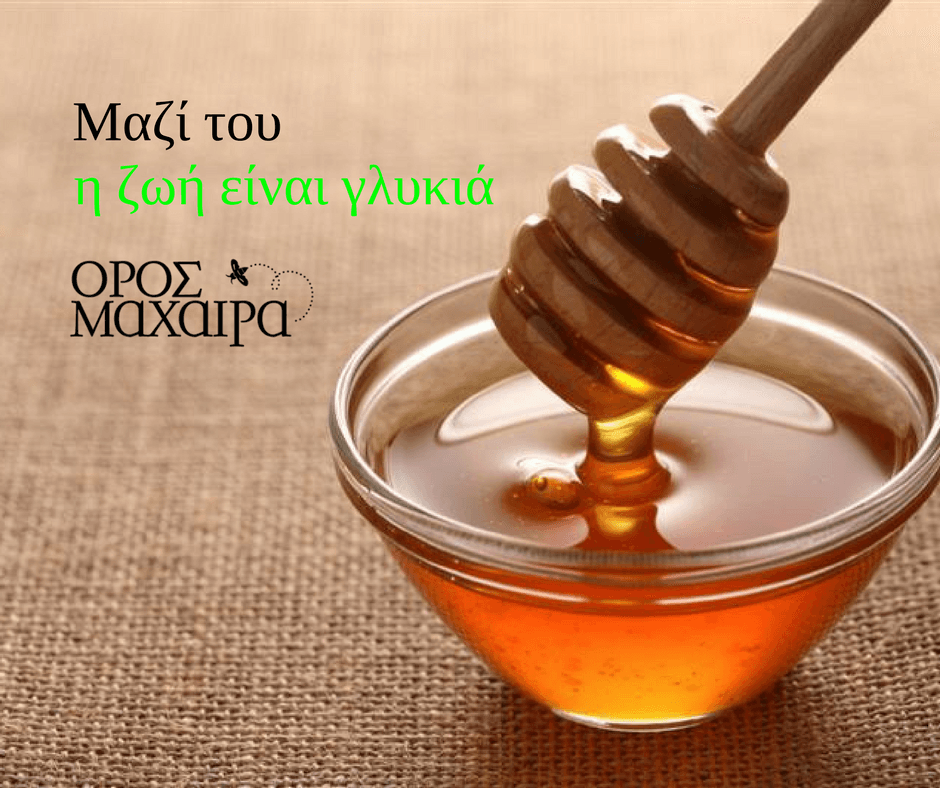
How valuable is honey for our lives?
A wonderful viscous sweetener, produced by bees originally as food for themselves. With a highly varied taste and texture, depending on the type of flowers it has come from.
Its most widely known form is made from clover, linden and acacia blossoms, thyme and lavender.
Its colours also vary — white, orange, red and in some cases almost black — and they are the main factor in judging the quality of honey.
With a history lost in time…
Humans have used it for the last 2,500 years, not only as a food but also as a medicine, thanks to its properties, which will be discussed in more detail below. For many centuries, in many cultures, it was considered sacred, because of its sweet properties and its rarity. It was widely used for a variety of medicinal and cosmetic purposes, and because it was moreover a very expensive commodity, for a long period it was used only by the wealthy.
On its own or with… company
What undoubtedly makes honey such a popular and beloved product with the general public is the ease with which it can be consumed in every possible way. It is eaten on its own, or mixed with juice, or with hot water as a cordial or drink. It also accompanies baked goods as a spread together with a soft-type plant margarine, or on its own, while it can be combined with other herbs and fruits in various cooking or pastry recipes.
Instead of sugar
It is an excellent sweetening substance which, in many cases of foods and drinks, can replace sugar, since 69% of its composition consists of glucose and fructose. As is well known, supplying the liver with the ideal quantity of glucose is very important for the best possible metabolism of glucose during sleep. Honey is an ideal fuel for the liver, because its ratio of glucose to fructose touches the ideal quotient of 1 to 1.
Fructose, moreover, helps convert and incorporate glucose into its storable form in the liver and muscle cells, glycogen. In addition, adequate storage of glycogen in the liver is essential for supplying the brain with fuel during sleep and prolonged exercise.
Honey for every ailment?
Clinical studies demonstrate that consuming honey can significantly optimise blood sugar control and insulin sensitivity, compared with other sweetening substances. In addition, a demonstrably more beneficial effect of honey has been reported in patients with type 1 Diabetes Mellitus. Moreover, it is being proven more and more that it slows the oxidation of the bad LDL-c cholesterol, which is the primary culprit in the onset of atherosclerosis.
A weapon for oral health
It shows strong antimicrobial action against the majority of the known bacteria of dental plaque. And it leads to a drastic reduction in acid production, killing or deactivating bacteria that are considered fully responsible for the onset of tooth decay. It also inhibits the growth of other oral bacteria.
Does honey make you fat?
It is a most important source of energy and carbohydrates for the body, since it provides 64 calories per tablespoon. It is characteristically noted that the glucose contained in honey is one of the most easily absorbed by the body.
As was established by research from the department of Exercise & Athlete Nutrition at Memphis University, honey is one of the most effective forms of carbohydrate for the necessary “charging” of an exerciser before a workout — not only because it is easily digested and released at a steady rate into the muscular system, but also because it increases muscle endurance and neutralises the feeling of fatigue. Consuming it with hot water before a workout leads to the assimilation of body fat and its different storage in the body. Therefore, by extension, to a reduction of body weight.
Vitamins and minerals
It is a rich source of vitamins and inorganic components. It contains vitamin C, a variety of the B complex vitamins, A, D and E. Important trace elements such as iron, phosphorus, sulphur, manganese, magnesium, sodium, calcium, iodine, chlorine and zinc. It is an excellent tonic for the intestinal tract, thanks to the choline it contains, with the consequence that it is frequently used to combat constipation. It has strong antioxidant capacity, thanks to the amino acids it contains: lysine, tryptophan, cysteine, histidine, tyrosine are only some of them.
Its therapeutic action
Based on the latest clinical research, it is heavily used in the treatment and healing of wounds. With documented evidence, then, it appears that honey: relieves pain locally!!!!!
Because of its osmolarity, it dries out bacteria and holds them back, thanks to the hydrogen peroxide it produces. It activates the body’s immune response more directly, by supplying glucose to the white blood cells. It reduces inflammation and stimulates the growth of new cells, while helping to expel dead tissue. It is a powerful source of antioxidants. It improves the body’s immunity, fighting free radicals and slowing ageing.
University review of the medicinal use of honey.
Penn State College of Medicine – Soothes the vocal cords. Relieves the throat from coughing and helps combat some viral infections.
Lund University, Sweden – Consuming honey aids digestion and increases energy, and it is the most effective treatment, compared with any other medicinal antibiotic, for treating stomach ulcers, gangrene and infections of surgical incisions.
Christie Hospital, Dipsbury, Manchester – They intend to use honey for the faster recovery of cancer patients after operations to remove carcinomas.
Based on all of the above, the immediately drawn conclusion is that we have yet another well-hidden weapon in the arsenal of Greek Mediterranean cuisine!
Source; http://www.rodiaki.gr