
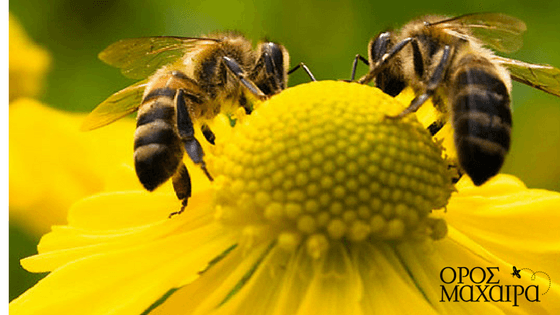
What will happen if the bees disappear?
Can you imagine summer without watermelon, melon, cucumber, courgette and aubergine? And not only these, but also dozens of other favourite fruits and vegetables of ours that depend on bees for their pollination, that is, the fertilisation of the flower so that their fruit can be produced. Since the late 1990s, beekeepers, mainly in Europe and North America, had observed that the populations of honey bees (the bees that live in hives and produce honey) were declining at unusually rapid rates. These bees are essential for the production of our food because they pollinate plants, and they are not the only ones. Other insects, such as wild bees and butterflies, also carry out valuable pollination work. More than 35% of the world’s food production depends on pollinator insects. Of the 100 species of crops which produce 90% of the world’s food, 71 are pollinated by bees. Without them, millions of people and animals would suffer from food deprivation. In Europe alone, more than 4,000 species of vegetables grow thanks to the tireless work of bees.